[Cusabio] Tuberculosis(TB): inhA, gyrA, gyrB, mpt63, PstS1, esxH...Key Targets Involved in Anti-TB D
작성자
abbabio
작성일자
2022-10-20
조회수
367
If you are unable to see the message below, click here to view.
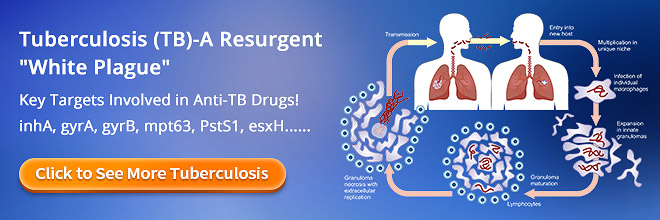
On September 30, 2022, WHO announces a new operational handbook on tests for the diagnosis of Tuberculosis (TB) infection. Obviously, tuberculosis is still one of the major causes of mortality since two million people die each year from disease. Treatment of TB is complicated owing to the unique capacity of the causative bacterium (Mycobacterium tuberculosis). In addition, drug resistance is an increasing problem for the tuberculosis prevention. Thus, TB control programs require both new drugs to overcome existing resistance and rapid detection tests for drug resistance (Click to see more about Tuberculosis).
Isoniazid is the earliest anti-TB drugs and works via inhibition of InhA, a component of FAS-II. Mutations in InhA are often seen clinically with highly resistant strains. Targeting InhA inhibitors which do not require activation shows promise. Fluoroquinolones are antibiotics with bactericidal activity which mainly target DNA gyrase, encoded by gyrA and gyrB. High level resistance is generally conferred by GyrA subunit mutation. Thus, there has been a lot of emphasis on developing new analogs of these successful antibiotics (Click to See New Anti-TB drugs). Notably, with advances in molecular biology and the availability of genome sequencing provide a wider range of novel targets in drug design for tuberculosis (TB) treatment.
Currently, CUSABIO presents the well-known key targets involved in Tuberculosis, to help researchers and pharmaceutical companies in Tuberculosis investigation or its new drug research!